

Have you ever wondered if that life coach you’re considering actually knows what they’re doing?
Here’s something that might shock you: Anyone can call themselves a personal life coach without needing any qualifications. Wild, right?
That’s because the coaching industry is currently unregulated. Some coaches have invested hundreds of hours in training and certification, while others just hang up a shingle one day.
As women trying to grow and improve ourselves, we deserve better than that. We deserve a coach who’s qualified to guide us through our challenges.
This industry’s lack of regulation means you have to do the work to find someone legit. And we’re going to help you figure out exactly how to do that.
We’ll walk through what qualifies someone to be a good coach, give you a quick rundown on how to find one, and clear up some common myths about what coaching really looks like.
How to Tell if a Coach Is the Real Deal
The industry doesn’t have formal regulations, but credible coaches typically hold at least a bachelor’s degree and pursue life coaching-specific credentials. These certifications show they’ve invested time in learning how to coach effectively and didn’t just watch a few YouTube videos and decide they’re an expert.
Look for someone with International Coaching Federation (ICF) certification. This is the gold standard for coaching credentials.
Here is the breakdown of the three coaching levels:
An Associate Certified Coach (ACC) has completed 60+ hours of coach-specific education and has logged 100+ hours of actual coaching experience with at least 8 clients.
A Professional Certified Coach (PCC) steps it up with 125+ hours of training and 500+ hours of coaching experience with a minimum of 25 clients. This is where you start seeing more seasoned professionals.
For the highest level, a Master Certified Coach (MCC) has acquired 200+ hours of training and 2,500+ hours of coaching experience with at least 35 clients. These coaches have serious experience under their belt.
When you’re evaluating potential coaches, these credentials give you a real picture of their qualifications. A certified coach has invested significant time in both learning and practicing, which directly impacts how effectively they can support your goals.
How to Kick Off the Search for Your Perfect Coach

Image Source: Extended Learning / TXST Online / Continuing Education – Texas State University
Here’s what we’ve learned about finding a coach who gets you: It starts way before you even pick up the phone.
Start with yourself first. What’s really going on in your life right now? Are you stuck in a career that doesn’t fit? Struggling with relationships? Feeling lost about your direction?
It may sound obvious, but you’d be surprised how many people skip this step and end up with a coach who’s completely wrong for their situation.
Once you’re clear on what you need help with, it’s time to start looking. You can search on Google, Instagram, LinkedIn, or Facebook for potential coaches. Asking friends for referrals is a popular, effective method—83% of people act on word-of-mouth recommendations.
Do your homework. Read potential coaches’ website content and social media posts. This gives you a feel for their personality and approach. Do they sound like someone you’d be comfortable talking to?
Many experienced coaches specialize in areas such as executive, relationship, health and wellness, career development, financial, and parental coaching. A coach who focuses on career transitions might not be the best fit if you’re working through relationship challenges. Make sure their specialty vibes with your goals.
Most coaches offer free consultations, and these are gold. Schedule calls with the ones who seem like a good fit.
Pay attention to how these professionals make you feel during that call. Do they ask questions that make you think? Do they truly listen to your answers? Can you imagine being honest with this person about your struggles?
Check out what their other clients say about working with them. Testimonials can give you a great picture of their coaching style and it if meshes with what you’re looking for.
Think about whether you prefer meeting virtually or in person and make sure they can accommodate your preference. Both can be effective. It’s about what feels right for you.
Trust your gut. If something feels off, keep looking. And don’t just pick the cheapest option. This is an investment in yourself, so focus on the value you’ll get rather than just the price tag.
What Actually Happens When You Work with a Life Coach (And What Doesn’t)?
Let’s clear up some things about what working with a life coach really looks like.
Your sessions will usually last about 45 to 60 minutes. You’ll typically meet weekly or every other week, depending on what works for your schedule and goals. But here’s what you need to know—the real work happens between sessions.
Your coach is going to give you homework. Yes, actual assignments to work on throughout the week. It might sound like school, but this is where the magic happens. Most of your growth doesn’t come from sitting in that chair talking for an hour. It comes from how you use those insights when you’re back in your real life.
How long before you see results? Many people notice clarity within the first few sessions, especially regarding what they actually want and the next steps to take. But real, measurable changes? That typically shows up within 4 to 12 weeks if you’re consistently showing up and doing the work. Most coaching relationships last 3 to 6 months to establish new habits and ways of thinking, though some people choose to stick with it longer for deeper transformations.
Now, let’s talk about what coaching isn’t. This is important because there is a lot of confusion out there about this.
Coaching is not therapy. Your coach isn’t going to dig into your childhood trauma or diagnose any mental health conditions. Therapists focus on healing past wounds and treating mental health issues. Coaches focus on where you want to go and how to get there. If you’re dealing with depression, anxiety, or other mental health challenges, you might want to check with a therapist first.
Your coach won’t tell you what to do. I know that might sound frustrating, especially when you’re stuck and just want someone to give you the answers. But here’s the thing: You’re the expert on your own life. A good coach will ask you powerful questions that help you figure out your own solutions. They’re more like a really good thinking partner than someone who hands you a roadmap.
This means you’ve got to be willing to do the work. Your coach can’t want change for you more than you want it for yourself. Success depends on how much effort you put into those assignments and how honestly you show up to your sessions.
The coaching relationship works best when you see it as a partnership. You bring your life experience and goals—they bring their training and perspective. Together, you figure out how to get you where you want to be.
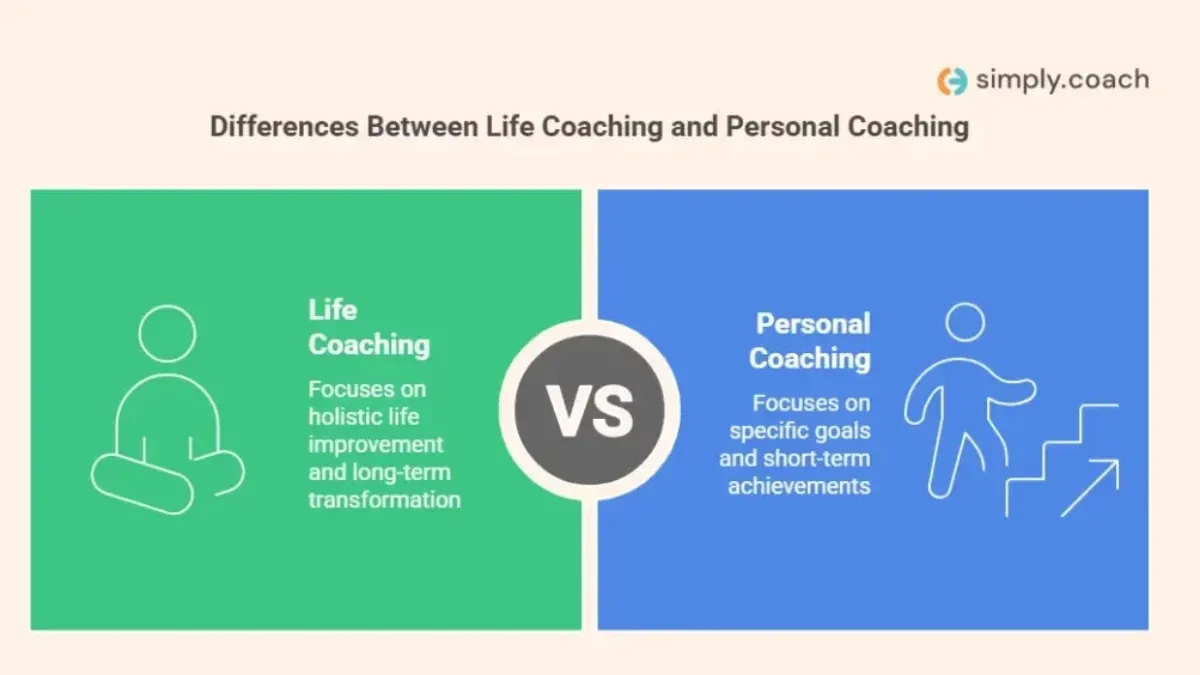
Image Source: Simply.Coach
Key Takeaways
You now have everything you need to find a personal life coach who genuinely fits your goals and values. Look for ICF credentials, evaluate their specialization against your needs, and trust your intuition during consultations. Remember that coaching is a partnership focused on your future growth, not therapy for past wounds. Take the next step toward the support you deserve by contacting a coach today. The right coach will ask powerful questions that will help you discover your own answers. Your commitment to showing up and doing the work between sessions will determine your success. Keep searching until you find that perfect match, and watch your personal development journey transform.
Frequently Asked Questions
How do I find the right life coach for me?
Start by defining your specific goals and needs, whether that’s career transitions, relationships, or personal growth. Research coaches through Google, social media platforms like Instagram and LinkedIn, or ask friends for referrals. Check potentials coaches’ credentials, read their content to understand their values, and schedule free consultations with those who resonate with you. Pay attention to their communication style and whether their specialization matches your needs.
What qualifications should I look for in a life coach?
Look for coaches with International Coaching Federation (ICF) credentials. An Associate Certified Coach (ACC) has 60 hours of training and 100 hours of experience, a Professional Certified Coach (PCC) has 125 hours of training and 500 hours of experience, and a Master Certified Coach (MCC) has 200 hours of training and 2,500 hours of experience. These certifications demonstrate their commitment to professional standards and expertise.
How long does life coaching take to show results?
Many clients notice clarity within the first few sessions, particularly around goals and next steps. Measurable progress generally appears within 4 to 12 weeks of continuous coaching. A typical coaching engagement lasts 3 to 6 months to establish new behaviors, though some continue longer for deeper transformation, depending on individual needs.
What’s the difference between a life coach and a therapist?
Therapists focus on healing past experiences and treating mental health conditions, while life coaches concentrate on future goals and taking action. Coaches don’t diagnose conditions or provide therapy; instead, they help you discover your own solutions through powerful questions and facilitate your self-discovery, with you remaining the expert on your own life.
What should I expect from life coaching sessions?
Sessions typically last 45 to 60 minutes and are held weekly or biweekly. Your coach will assign specific tasks between sessions to create accountability and drive progress. The relationship functions as a partnership where the coach asks insightful questions to help you reflect and discover your own answers, rather than telling you what to do or solving problems for you.


