

You know those moments when your mind feels like it's working against you? When everything seems overwhelming and you wonder if anyone else understands what you're going through?
Mental health quotes can be lifelines during those times. They remind you that other people have walked similar paths and found ways through the darkness.
Here's something I want you to know upfront: mental health struggles are real, and they're more common than you might think. About one in five people deal with mental health challenges [15] [6], yet so many of us feel like we're the only ones fighting these battles.
The truth is, there's still a lot of shame around mental health. People worry about being judged or seen as “broken.” But here's what I've learned – asking for help isn't a sign of weakness. It's one of the bravest things you can do.
These 47 quotes aren't magic solutions. They won't make your anxiety disappear overnight or cure your depression. But they can offer comfort when you need it most. They can remind you that you're not alone in this journey.
Some come from people who've battled their own mental health demons. Others come from therapists and advocates who've dedicated their lives to helping people heal. All of them offer something valuable – perspective, hope, and validation when you're struggling to find it yourself.
If you're looking for professional help, consider these resources:
- BetterHelp connects you with licensed, professional therapists you can trust—offering confidential, high-quality support for anxiety, depression, trauma, and more, all on your schedule and from anywhere with an internet connection. Now you can experience peace of mind, emotional relief, and true growth through a proven, convenient platform designed to meet you exactly where you are.
- Online-Therapy.com is a private, flexible, and therapist-supported platform rooted in Cognitive Behavioral Therapy that helps you manage anxiety or depression with interactive tools, daily feedback, and holistic practices—so you can start feeling better anytime, anywhere.
- Talkspace offers a trusted, convenient path to therapy that fits seamlessly into your life—so you can experience peace of mind and real results. With licensed experts, proven support, and the comfort of messaging your therapist anytime, it makes mental health care easy, confidential, and truly personalized.
You are stronger than you think – Lori Gottlieb
“You are stronger than you think. You have gotten through every bad day in your life, and you are undefeated.”
— Lori Gottlieb, Renowned psychotherapist, bestselling author of ‘Maybe You Should Talk to Someone'
Image Source: QuoteFancy
Have you ever been in a place where you felt like you couldn't handle one more thing? Where your mind convinced you that you just weren't strong enough to get through whatever was happening?
“You are stronger than you think. You have gotten through every bad day in your life, and you are undefeated,” says therapist Lori Gottlieb [15].
When I first heard these words, I'll be honest – I rolled my eyes a little. It sounded like another one of those “just think positive” statements that people throw around. But then I really thought about it, and I realized something important.
Quote meaning
This quote isn't asking you to pretend you're invincible or that everything is fine when it's not. It's pointing out something you might not be giving yourself credit for – you're still here.
Every panic attack, every depressive episode, every day when anxiety made simple tasks feel impossible – you got through them. Maybe it wasn't pretty. Maybe you barely made it. But you did make it.
Gottlieb reminds us that strength isn't about never falling down. It's about the fact that you keep getting back up, even when you don't think you can. As Marcus Aurelius noted, “You have power over your mind, not outside events” [15]. You might not be able to control what happens to you, but you've proven you can survive it.
Why this quote helps
This quote works because it shifts your focus from what you can't do to what you've already done. When you're in the middle of a mental health struggle, it's easy to forget that you have a track record.
Instead of thinking “I can't handle this,” you can remind yourself “I've handled things before.” According to mental health experts, “developing mental strength means knowing that you'll be OK no matter what happens” [15].
Your brain might tell you that this time is different, that this challenge is too big. But Gottlieb reminds us that “most big transformations come about from the hundreds of tiny, almost imperceptible, steps we take along the way” [15]. You don't have to conquer everything at once.
Who said it
Lori Gottlieb is a psychotherapist and bestselling author of “Maybe You Should Talk to Someone.” What I appreciate about her approach is that she doesn't sugarcoat things. She knows that healing is messy and complicated.
Gottlieb emphasizes that “there is a difference between self-blame and self-responsibility” [3]. She's not asking you to blame yourself for struggling. She's asking you to recognize the strength you've already shown by continuing to try, even when it's hard.
When to reflect on it
Think about this quote when you catch yourself saying things like “I can't do this” or “I'm not strong enough.” Use it when you're facing something new and scary, or when old challenges feel overwhelming again.
It's especially helpful during transitions or major life changes. As Gottlieb says, “the nature of life is change, and the nature of people is to resist change” [3]. When everything feels uncertain, remember – uncertainty isn't new for you. You've faced the unknown before and found your way through.
Fall seven times, stand up eight – Japanese Proverb
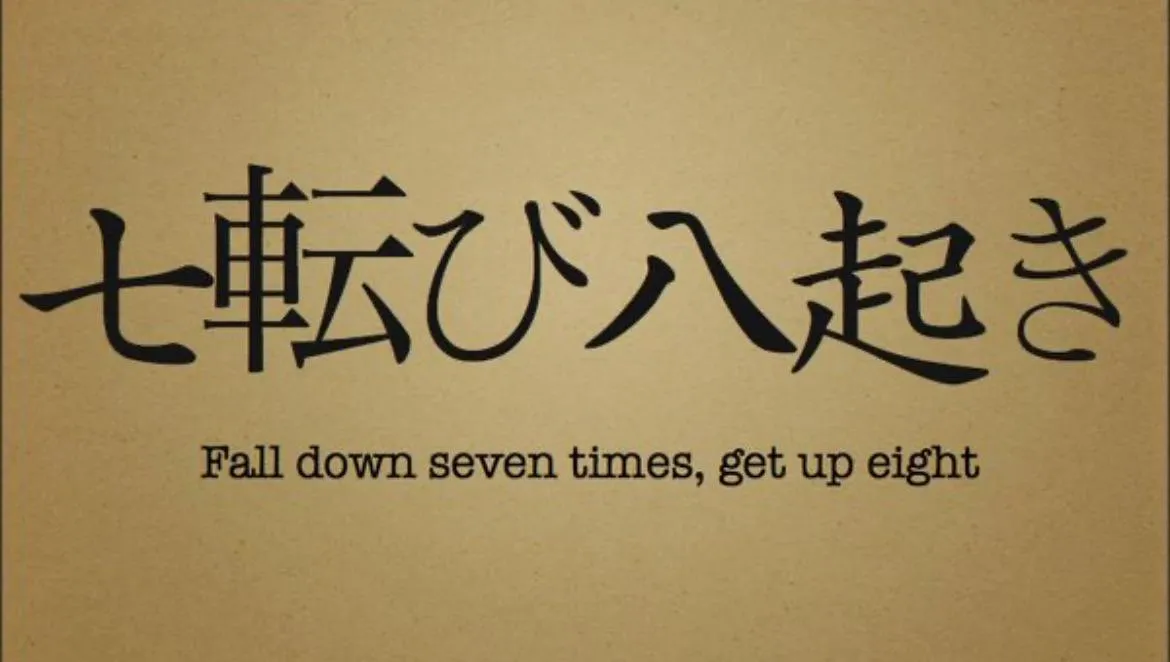
Image Source: Reddit
There's an ancient Japanese saying that goes “Nana korobi, ya oki” – fall seven times, stand up eight.
When I first heard this, it confused me a bit. If you fall seven times, wouldn't you only need to stand up seven times? But that's exactly the point. The eighth time represents hope. It means you're ready to face whatever comes next.
Quote meaning
This isn't just about bouncing back from failure. It's about something deeper.
The Japanese have this concept called gambaru – which means “never give up” [6]. It's not just about trying harder. It's about sticking with something even when it feels impossible.
What I love about this proverb is that it assumes you're going to fall. It doesn't say “try not to fall” or “avoid falling at all costs.” It says you will fall seven times. And that's OK.
The focus isn't on your current situation – maybe you're struggling with anxiety, depression, or just having a really tough time. The focus is on what you do next. It's about never giving up hope and always believing there's something better ahead [5].
Why this quote helps
I think this quote works so well for mental health struggles because it makes setbacks normal.
How many times have you felt like you were finally getting better, only to have a bad day that made you feel like you were back at square one? This proverb says that's expected. That's just part of the process.
“There are no quick fixes in life and anything of real worth will necessarily take much struggle and perseverance” [7]. The Japanese understood this centuries ago.
What matters isn't that you fell. What matters is that you keep getting back up. Your resilience isn't measured by how many times you avoid falling – it's measured by how many times you choose to stand again [8].
Who said it
This wisdom doesn't come from one person. It comes from generations of Japanese culture and experience [6].
Think about that for a second. This isn't one person's opinion or one therapist's advice. This is what an entire culture learned about resilience over hundreds of years.
The fact that this saying has survived so long and now resonates with people all over the world tells you something important. The experience of falling and getting back up is universal. You're not the first person to struggle, and the people who came before you figured out how to keep going.
You are not alone – Shonda Rhimes
Image Source: Good Good Good
Have you ever felt completely invisible? Like you could disappear and nobody would even notice?
“You are not alone. You are seen. I am with you. You are not alone,” Shonda Rhimes reminds us [9]. Sometimes the simplest words carry the most power.
Here's something that might surprise you: one-third of Americans report feeling lonely every week [10]. That means millions of people are walking around feeling exactly like you do when loneliness hits.
But we don't talk about it, do we?
Quote meaning
This quote gets to the heart of what we all desperately need – to know that someone sees us. Rhimes talks about this as “the need for one human being to hear another human being say to them” that they're not struggling alone [9].
She should know. Loneliness has shaped everything she's created. She calls it “the fear of being alone, the desire to not be alone” [11]. It's the thread that runs through all her stories.
Why this quote helps
When you're drowning in loneliness, your brain tells you lies. It whispers that you're the only person who has ever felt this terrible. That everyone else has their life figured out while you're falling apart.
Mental health experts know this pattern well: “when you feel lonely, you think you're the only person in the world that could possibly feel this bad” [12].
Rhimes' words interrupt that lie. They remind you that isolation is an illusion, even when it feels completely real.
Who said it
Shonda Rhimes created the shows that kept many of us company during our loneliest nights – Gray's Anatomy, Scandal, and more. But here's what makes her words even more powerful: she's been brutally honest about how “writing stories in Shondaland quite literally saved my life” [13].
Her work isn't just entertainment. It's connection. It's showing people who rarely see themselves on screen that they matter, that their stories count.
When to reflect on it
Turn to this quote when shame makes loneliness feel like a personal failure. When you're convinced that needing connection makes you weak or needy.
Remember it too when someone you care about is struggling. Sometimes the most healing thing you can do is simply acknowledge their pain instead of trying to fix it.
Healing takes time – Mariska Hargitay

Image Source: Facebook
“Healing takes time, and asking for help is a courageous step.”
I know how frustrating it can be when people tell you to “just give it time” when you're struggling. But here's the thing – Mariska Hargitay isn't just throwing around empty words of comfort. She's speaking from experience.
What this really means
When Mariska talks about healing taking time, she's not saying you should just sit around and wait for things to get better. She's acknowledging something most of us don't want to hear – recovery doesn't happen overnight.
There's no magic timeline for healing from trauma, anxiety, or depression. Some days you'll feel like you're making progress, and other days you'll feel like you're back at square one. That's not failure – that's just how healing works.
And that second part about asking for help being courageous? She means it. I've been there – sitting in my car outside a therapist's office, wondering if I really needed to be there. Wondering if people would think I was weak or broken.
But reaching out when you're struggling takes real strength.
Why these words matter
Mariska lost her mother when she was just three years old. That kind of trauma doesn't just disappear because you want it to. She carried that pain with her for years before she finally got the help she needed.
She's talked openly about how therapy – specifically things like EMDR and somatic reprocessing – literally gave her life back. But it didn't happen in a few sessions. It took time, patience, and a lot of courage to keep showing up.
Through her Joyful Heart Foundation, she helps other survivors understand that healing isn't linear. Sometimes you take two steps forward and one step back. Sometimes it feels like you're not moving at all.
Who said it
Beyond her role on Law & Order: SVU, Mariska has become a voice for survivors. Her advocacy work isn't just professional – it's personal. She founded the Joyful Heart Foundation because she understood what it felt like to carry trauma and need healing.
When she talks about therapy giving her “space” – space that she says is “synonymous for healing” – she's talking about the room to breathe, to feel, to exist without carrying all that weight alone.
When you need to remember this
Think about these words when you're feeling impatient with your own healing process. When you catch yourself thinking “I should be better by now” or “Why is this taking so long?”
Remember them when you're scared to reach out for help because you think it makes you weak. It doesn't.
You don't have to control your thoughts – Dan Millman

Image Source: Facebook
Have you ever tried to stop thinking about something, only to find it pops up even more? “You don't have to control your thoughts. You just have to stop letting them control you,” says Dan Millman, and honestly, this changes everything about how we approach our minds.
Quote meaning
Here's the thing – your brain produces thousands of thoughts every day. Most of them just happen automatically, like your heart beating or your lungs breathing.
Millman isn't saying you should ignore your thoughts completely. Instead, he's pointing out something important: there's a big difference between having a thought and being ruled by that thought.
Think of your thoughts like clouds passing through the sky. You can notice them, observe them, even acknowledge them. But you don't have to chase every cloud or try to make them disappear. The sky remains the same whether the clouds are there or not.
This connects with mindfulness practices that teach us to watch our thoughts without getting caught up in them. You become the observer of your mind instead of being controlled by whatever random thought shows up.
Why this quote helps
This perspective is so helpful because it takes the pressure off. How many times have you beaten yourself up for having anxious thoughts or negative thoughts?
When you try to force thoughts away, they often get stronger. It's like telling yourself not to think about a pink elephant – suddenly that's all you can think about.
This quote gives you permission to let thoughts exist without fighting them. You don't have to be perfect. You don't have to have a completely peaceful mind. You just need to remember that you're not your thoughts.
When an anxious thought pops up, instead of panicking about having it, you can think “Oh, there's anxiety talking again” and let it pass through.
Who said it
Dan Millman used to be a world champion gymnast and college professor. After a serious motorcycle accident changed his life, he started exploring how to live with more awareness and less mental struggle.
His book “Way of the Peaceful Warrior” became really popular because he explains deep concepts in practical ways. He takes ideas from Eastern philosophy and makes them work for everyday people dealing with everyday problems.
Millman knows firsthand what it's like when your mind feels like it's working against you, and his approach focuses on working with your thoughts instead of against them.
There is hope, even when your brain tells you there isn't – John Green
Image Source: QuoteFancy
Depression is a liar.
It tells you things will never get better. It convinces you that the darkness you're feeling right now is permanent. It makes hope feel impossible to find.
“There is hope, even when your brain tells you there isn't,” writes John Green, and these words hit differently when you're struggling with mental health struggles.
Quote meaning
This quote gets to the heart of what depression does – it messes with your ability to see reality clearly. When you're depressed, your brain becomes really good at filtering out anything positive and amplifying everything negative.
Green's words remind us that there's a difference between what we feel and what's actually true. Just because you can't feel hope doesn't mean it doesn't exist. It's still there, waiting for you, even when your mind is telling you otherwise.
The quote basically says “Don't trust everything your brain tells you when you're depressed.” And that's huge, because depression can be very convincing.
Why this quote helps
This perspective helps because it creates distance between you and your depressive thoughts. Instead of thinking “I am hopeless,” you can think “My depression is telling me I'm hopeless.”
That might seem like a small difference, but it's actually massive. It means the hopelessness isn't you – it's a symptom.
When I'm having a really bad mental health day, I try to remember that my brain isn't always telling me the truth. It's trying to protect me, but sometimes it gets things wrong.
Who said it
John Green wrote books like “The Fault in Our Stars” and “Looking for Alaska.” But beyond being a successful author, he's been open about his own battles with obsessive-compulsive disorder and depression.
He talks about mental health on his YouTube channel and has become an advocate for people dealing with similar struggles. His honesty about his own experiences makes his words feel authentic rather than just inspirational.
When to reflect on it
Turn to this quote when your mind is telling you that things will never improve. When you're convinced that you're broken or that recovery isn't possible for you.
It's especially helpful during those really dark moments when suicidal thoughts creep in. These simple words can serve as a reminder that your brain's negative messaging system isn't always accurate.
Mental health is not a destination – Noam Shpancer
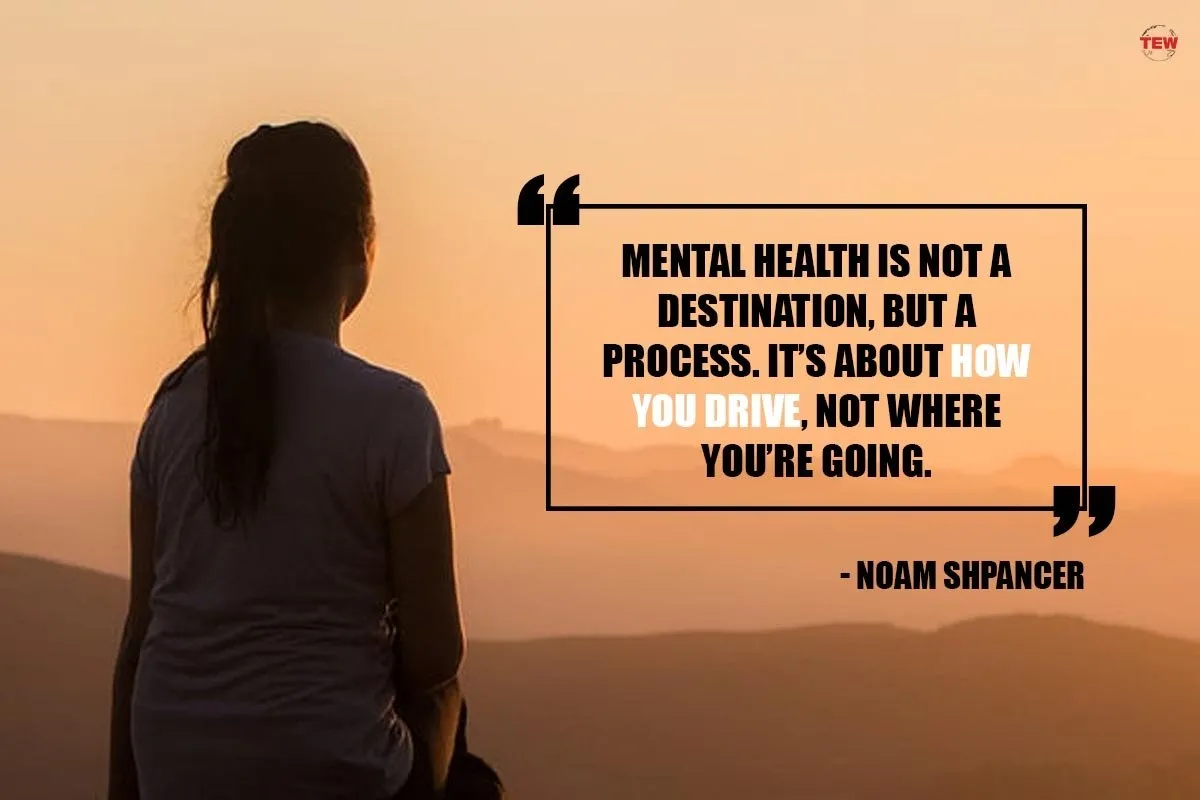
Image Source: The Enterprise World
Do you ever feel like you're failing at mental health? Like there's some finish line you should have crossed by now, but you're still struggling with the same old patterns?
“Mental health is not a destination, but a process. It's about how you drive, not where you're going,” says psychologist Noam Shpancer. This completely changes how we think about healing.
Quote meaning
Here's what this quote is really saying: stop waiting to “arrive” at perfect mental health. It's not going to happen.
Mental wellness isn't like getting a degree or reaching a weight goal. There's no ceremony where someone hands you a certificate that says “Congratulations! You're mentally healthy now.”
Instead, it's about how you handle the daily stuff. How you respond when anxiety creeps in. How you bounce back from a bad day. How you talk to yourself when things go wrong.
The driving metaphor makes perfect sense. A good driver isn't someone who never encounters traffic jams or construction zones. A good driver is someone who knows how to navigate those challenges safely.
Why this quote helps
This perspective takes so much pressure off. I know for me, I used to beat myself up every time I had an anxious day, thinking “I should be past this by now.”
But that's not how mental health works. You can do all the therapy, take the right medication, practice mindfulness daily, and still have rough patches. That doesn't mean you're failing.
When you accept that mental health is an ongoing process, you can be gentler with yourself. Bad days don't mean you're back to square one. They're just part of the journey.
Who said it
Noam Shpancer knows what he's talking about. He's both a psychology professor at Otterbein University and a practicing clinical psychologist who specializes in anxiety disorders.
He wrote “The Good Psychologist,” which digs into what therapy relationships really look like. Having both academic knowledge and hands-on clinical experience gives his words extra weight.
This isn't just theory for him – it's based on years of actually helping people work through their mental health challenges.
You are not the rain – Matt Haig

Image Source: Dual Diagnosis Hub
Sometimes we get so caught up in our mental health struggles that we start thinking we ARE our anxiety or depression. “Mental health problems don't define who you are. They are something you experience. You walk in the rain and you feel the rain, but, importantly, YOU ARE NOT THE RAIN,” writes Matt Haig.
This might be one of the most powerful things I've ever read about mental health.
Quote meaning
Think about it – when you're walking in the rain, you feel wet and uncomfortable. The rain affects you. But you don't become the rain itself.
That's exactly what Haig is saying about mental health challenges. Depression, anxiety, panic attacks – they're things you experience, not things you are. The rain metaphor makes something that feels so internal and personal suddenly make sense in a different way.
Haig understands this struggle personally. He talks about how hard it is to explain what you're feeling when you need help – how do you put into words something that feels like it's consuming your entire identity?
Why this quote helps
This perspective helps because it gives you permission to separate yourself from your condition.
When you're in the middle of a depressive episode, it's easy to think “I am depressed” instead of “I am experiencing depression.” That small shift in language creates a huge shift in how you see yourself.
As Haig puts it, “Depression tells you everything is going to get worse, but that's a symptom.” When you can recognize that your mental health challenges are something happening TO you, not something you ARE, you stop giving them so much power over your identity.
Plus, storms pass. Rain stops. And mental health difficulties can shift too, without changing who you essentially are as a person.
Who said it
Matt Haig is a bestselling author who's been incredibly open about his own battles with depression and anxiety. At 24, he was in such a dark place that he considered ending his life. Instead, he found ways to rebuild and heal.
Now he uses his writing to help others understand that recovery is possible. His honesty about his struggles has helped countless people feel less alone in their mental health awareness journey.
The best way out is always through – Robert Frost
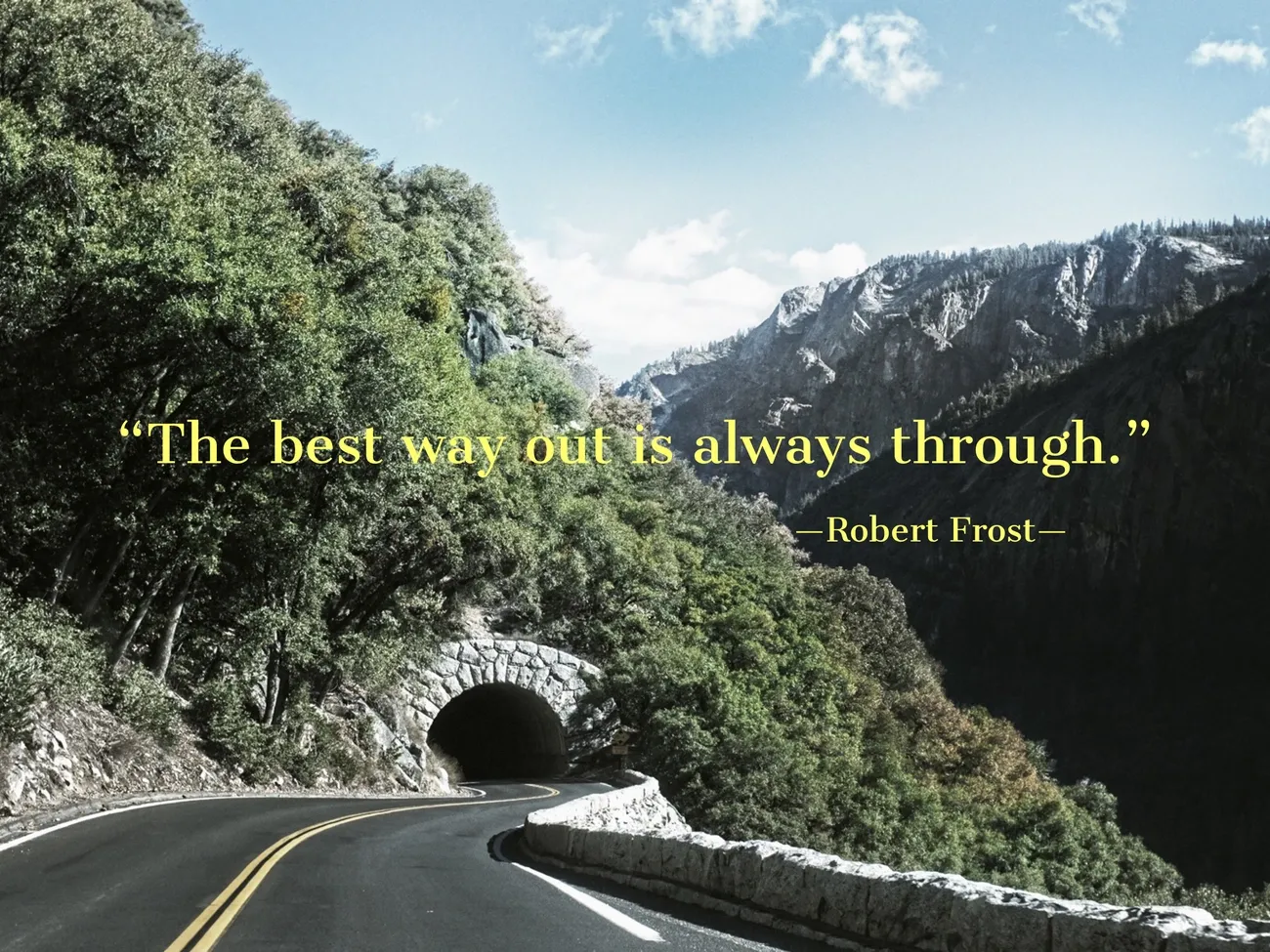
Image Source: Quotation Celebration – WordPress.com
Sometimes I think about all the times I've tried to run away from hard things. The panic attacks I've avoided talking about. The therapy sessions I've canceled. The difficult conversations I've put off until they became impossible.
“The best way out is always through,” wrote Robert Frost, and honestly, I wish someone had tattooed this on my forehead years ago [14].
Quote meaning
Frost understood something most of us learn the hard way – you can't go around your problems forever. Eventually, you have to walk right through the middle of them [3].
This isn't about being tough or pretending everything's fine. It's about accepting that the uncomfortable feelings you're trying to avoid? They're not going anywhere until you face them [3].
When Frost talks about going “through,” he means sitting with the anxiety instead of numbing it. Having the hard conversation instead of avoiding it. Feeling the grief instead of pushing it down [3].
It's the difference between running from a wave and diving under it. One keeps you fighting. The other gets you to the other side [3].
Why this quote helps
This quote helps because it gives you permission to stop exhausting yourself with avoidance [15].
I used to think I was protecting myself by staying away from anything that made me uncomfortable. But all I was really doing was making my world smaller and smaller.
When you face something directly, you realize it's usually not as terrible as your mind made it out to be [15]. Plus, there's something powerful that happens when you stop running – you start building confidence in your ability to handle difficult things [15].
The quote reminds you that healing isn't about finding a way around your pain. It's about finding a way through it [15]. And sometimes, the path that seems hardest is actually the one that leads to the most freedom.
Who said it
Robert Frost wasn't some guy who lived an easy life and wrote pretty poems about it [3]. He dealt with depression, financial struggles, and the death of several of his children [3].
His poetry came from understanding that life hands you hard things, and the only way to find meaning in them is to experience them fully [3]. He knew that growth happens in the difficult spaces, not in the comfortable ones.
You are braver than you believe – A.A. Milne
“Promise me you'll always remember: You're braver than you believe, and stronger than you seem, and smarter than you think.”
— A.A. Milne (Christopher Robin from Winnie the Pooh), English author, creator of Winnie the Pooh
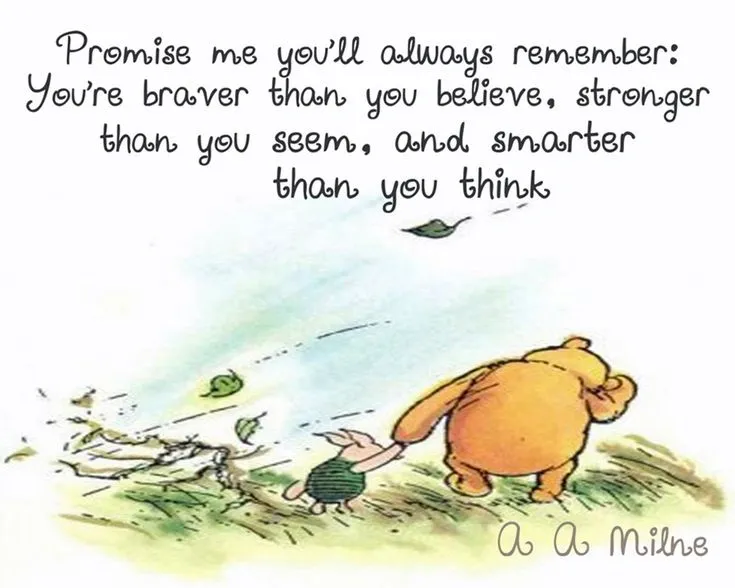
Image Source: Pinterest
Have you ever caught yourself thinking “I can't handle this” or “I'm not strong enough”?
Self-doubt has this sneaky way of making us forget our own capabilities. “You are braver than you believe, stronger than you seem, and smarter than you think,” A.A. Milne reminds us through Christopher Robin's words to Winnie the Pooh [16]. Sometimes we need someone else to see our strength before we can recognize it ourselves.
Quote meaning
This quote gets to the heart of something most of us struggle with – we're terrible at seeing our own potential. Christopher Robin's gentle words acknowledge that we consistently underestimate ourselves across the board – our courage, our strength, and our intelligence [17].
The quote challenges that inner voice that tells us we're not capable enough. It suggests that self-doubt isn't truth – it's just a barrier we've built in our own minds [16]. Sometimes the biggest obstacle to our growth is simply believing we're not capable of it.
Why this quote helps
When you're struggling with mental health challenges, that harsh inner critic can be relentless. This quote does something really important – it validates that you might feel inadequate while also gently challenging whether that feeling reflects reality [17].
I find it comforting that this reminder gives you permission to recognize strengths you might not even realize you have [18]. Sometimes we're so focused on what we think we can't do that we miss what we're actually capable of. The quote reminds us that many of our limitations exist only in our heads [19].
Who said it
A.A. Milne wrote this for Christopher Robin in “The House at Pooh Corner” [16]. What makes it beautiful is that it appears as words of encouragement – exactly what it continues to be for people today [18].
Milne created something that was meant to comfort a child but ended up offering hope to people of all ages facing their own struggles.
When to reflect on it
Turn to this quote when you're facing something that feels too big for you to handle [17]. It's especially helpful when that voice in your head is telling you that you're not capable of getting through whatever you're facing.
Remember it when self-doubt is loud and when you need a gentle reminder that you might be stronger than you think you are [16].
Even the darkest night will end – Victor Hugo

Image Source: Facebook
Have you ever been in a place where it feels like the pain will never end? Where you can't imagine things getting better, no matter what anyone tells you?
“Even the darkest night will end, and the sun will rise,” wrote Victor Hugo. These words hit different when you're in the thick of depression or anxiety.
Quote meaning
This quote is basically saying what every sunrise proves – that dark times don't last forever. Just like night always turns into day, Hugo believed that our worst moments will eventually give way to better ones.
The metaphor speaks to the “transient nature of suffering” and implies that “resilience and renewal are just on the horizon” [20]. It's Hugo's way of saying that no matter how bad things get, there's always another chapter coming. This reflects his broader “declaration of faith in human progress, that tyrannies collapse and dawns of justice eventually break” [21].
Why this quote helps
When you're dealing with depression or anxiety, your brain can convince you that this is just how life is now. That you'll never feel better.
This quote challenges that lie. It acknowledges that mental health challenges can feel like “overwhelming storms” while simultaneously affirming that “even in the darkest times, small steps toward hope can make a big difference” [22]. It serves as a reminder that challenges are “temporary and that brighter days are ahead” [23].
Sometimes you need someone to hold hope for you when you can't hold it yourself. That's what this quote does.
Who said it
Victor Hugo wrote these words in “Les Misérables” [2]. This wasn't some guy who lived an easy life either – Hugo went through “social upheaval and personal struggles,” which shaped his belief in “the eventual triumph of hope and justice” [20].
He wrote from experience, not theory. That's why his words carry so much weight.
You don't have to be positive all the time – Lori Deschene
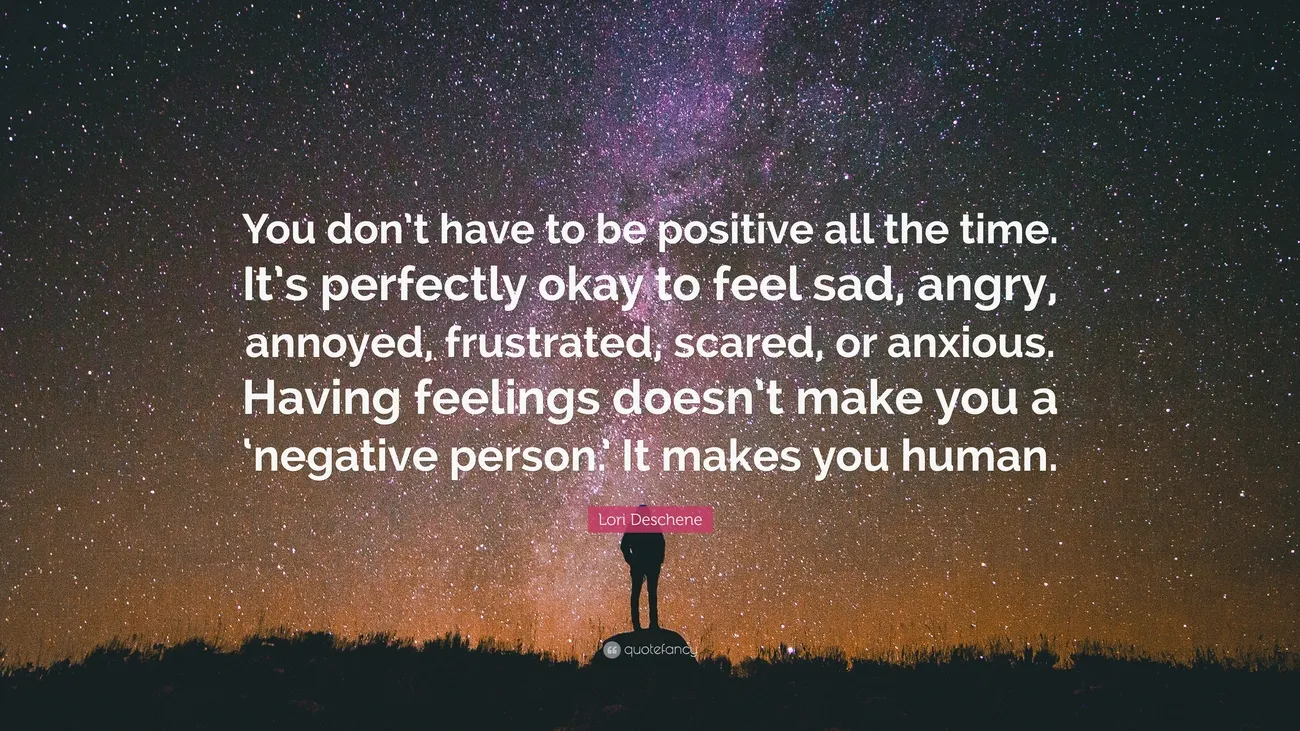
Image Source: QuoteFancy
Have you ever felt guilty for feeling sad? Like you're supposed to just “think positive” and everything will be fine?
“You don't have to be positive all the time. It's perfectly okay to feel sad, angry, annoyed, frustrated, scared and anxious. Having feelings doesn't make you a negative person. It makes you human,” writes Lori Deschene.
This quote hits hard because it gives you permission to feel what you're actually feeling.
Quote meaning
Deschene is calling out something we all deal with – toxic positivity. That's when people expect you to stay upbeat no matter what's happening in your life.
Think about it. When you're struggling and someone tells you to “just be grateful” or “look on the bright side,” how does that make you feel? Probably worse, right?
This quote says the opposite. It says your anger is valid. Your sadness matters. Your anxiety doesn't make you broken.
Feeling your emotions isn't negative – it's honest.
Why this quote helps
This perspective is freeing because it stops the shame spiral that comes with “negative” emotions.
When you're depressed and someone tells you to cheer up, now you feel depressed AND guilty for being depressed. That makes everything worse.
Deschene's words give you space to just be human. They remind you that the goal isn't to be happy all the time – it's to be authentic.
Sometimes being authentic means admitting you're scared. Sometimes it means saying you're angry. And that's completely OK.
Who said it
Lori Deschene founded Tiny Buddha, an online community where people share real stories about growth and healing. She created it after her own battles with depression, eating disorders, and body image issues.
What I love about her approach is that she doesn't pretend everything is always sunshine and rainbows. She gets that healing is messy and that's exactly what makes her voice so trustworthy.
Being vulnerable is a strength – Cara Delevingne
Image Source: Zencare blog
I used to think showing my emotions made me weak. That crying in front of people or admitting I was struggling somehow made me less capable.
“Being vulnerable is actually a strength and not a weakness,” Cara Delevingne reminds us, and honestly, this perspective changed everything for me [4].
Quote meaning
This hits right at the heart of something most of us learned growing up – that we should hide our pain and always appear “fine.” But Delevingne gets it. She knows what it's like to bottle everything up.
As she put it, “a lot of the time I think you can get used to bottling things up and pretending like everything's okay” [24]. But here's the thing – pretending doesn't actually make you stronger. It just makes you more isolated.
When Delevingne talks about vulnerability being strength, she's talking about the courage it takes to show up as your real self. The messy, imperfect, sometimes struggling version of yourself. “I really think it's about checking in with myself,” she says [24].
That's what real strength looks like – being honest about how you're actually doing.
Why this quote helps
This quote gives you permission to stop pretending everything's okay when it's not.
I know how exhausting it can be to wear that mask all the time. The constant performance of being “fine” when you're falling apart inside. Delevingne's words remind you that dropping that mask actually takes more courage than keeping it on.
Dr. Brené Brown calls vulnerability “the birthplace of empathy, creativity, love, and change” [25], and she's right. When you're honest about your struggles, you create space for real connection – both with yourself and others.
The beautiful thing is that vulnerability actually helps you process emotions better and build real resilience [25]. It's not about falling apart – it's about being honest about where you are so you can actually heal.
As Delevingne discovered, “feeling connected to yourself is the first step” toward getting better [24].
Who said it
Cara Delevingne is a model and actress who's been incredibly open about her battles with anxiety, depression, and addiction. She's used her platform to talk honestly about mental health, saying she wants to “help people by being honest about my own adversity or resilience” [24].
Her willingness to share her story has helped break down some of the stigma around mental health, especially in Hollywood [26]. Sometimes the most powerful thing you can do is simply tell the truth about what you're going through.
You are easy to love – Sonalee Rashatwar

Image Source: Facebook
Have you ever caught yourself thinking you need to be “better” before someone could really love you?
Maybe you tell yourself you're too anxious, too depressed, too much work. That once you get your life together, lose weight, fix your problems, then maybe you'll be worthy of love.
“What if you moved through the world as if you were easy to be loved? Because I promise you, you are easy to love,” says Sonalee Rashatwar. These words hit different when you've spent years believing otherwise.
Quote meaning
This quote turns everything we've been taught about worthiness upside down.
Most of us grow up thinking love is something we earn. Get good grades, look a certain way, don't be too needy, don't have too many problems. Rashatwar is saying that's all garbage.
Her words suggest something radical – that you're inherently lovable just as you are. Not because of what you do or how you look or how “together” you have it. Just because you exist.
The quote asks you to imagine moving through your day believing this truth. How would you talk to people? How would you take up space? How would you treat yourself?
Why this quote helps
When you're dealing with mental health struggles, feeling unlovable is part of the package.
Depression tells you that you're a burden. Anxiety convinces you that people will leave once they see the “real” you. These feelings make you hide parts of yourself or work overtime trying to prove your worth.
Rashatwar's words create a different starting point. Instead of trying to earn love, you get to practice receiving it. Instead of hiding your struggles, you can share them knowing they don't make you less worthy.
This shift matters because shame thrives in isolation. When you believe you're fundamentally unlovable, you pull away from the very connections that could help you heal.
Who said it
Sonalee Rashatwar is a fat, queer, non-binary licensed clinical social worker, sex therapist, and community organizer based in Philadelphia. Known online as “TheFatSexTherapist,” she combines clinical expertise with advocacy around disability justice, body acceptance, and decolonizing sexuality.
The wound is the place where the light enters you – Rumi
Image Source: Friends of Words
When you're going through something really difficult, it's natural to want the pain to just stop. You might find yourself thinking, “Why is this happening to me?” or “I just want this to be over.”
But here's something beautiful that the 13th-century poet Rumi understood: “The wound is the place where the Light enters you.”
Quote meaning
I know this might sound strange when you're in the middle of struggling. How can pain be a doorway to anything good?
Rumi wasn't saying that suffering is enjoyable or that we should seek it out. What he meant is that our most difficult experiences often crack us open in ways that allow something deeper to emerge. When we're forced to confront our wounds—whether they're emotional, spiritual, or even physical—we often discover parts of ourselves we never knew existed.
Think about it this way: when you're going through your hardest moments, you're also probably learning things about your own strength, resilience, and capacity to heal. The “light” Rumi talks about could be wisdom, compassion, or a deeper understanding of yourself and others. Vulnerability creates space for growth that wouldn't happen otherwise.
Why this quote helps
This perspective can be really comforting when you're in pain because it suggests that your suffering isn't meaningless. It's not happening “to” you—it's happening “for” you in some way.
When I think about my own difficult times, I can see how they taught me things I couldn't have learned any other way. They showed me what I was capable of surviving. They helped me understand other people's pain better. They made me more compassionate.
The quote doesn't minimize your pain or suggest you should be grateful for it. Instead, it offers hope that something meaningful can come from your struggles. Sometimes the most broken places in our lives become the most beautiful once they heal.
Who said it
Jalāl ad-Dīn Muhammad Rūmī was a Persian poet and mystic who lived over 700 years ago, yet his words still speak to people going through mental health struggles today. He wrote from his own experiences of loss and spiritual searching.
What's amazing about Rumi is how he could take the deepest human pain and find something sacred in it. His poetry comes from someone who understood suffering intimately but refused to let it have the final word in his story.
You can't stop the waves, but you can learn to surf – Jon Kabat-Zinn
Image Source: QuoteFancy
Have you ever watched surfers and wondered how they make it look so easy? They're not fighting the ocean – they're working with it. “You can't stop the waves, but you can learn to surf,” teaches Jon Kabat-Zinn, and this idea can change everything about how you handle difficult times.
Quote meaning
Think about it – waves are going to come whether we want them or not. The same goes for challenging thoughts, tough emotions, and stressful situations. Kabat-Zinn's surfing metaphor shows us something important: we don't have to control everything that happens to us.
Instead of exhausting ourselves trying to stop the waves, we can learn to ride them. This doesn't mean we like every wave that comes our way. It means we develop skills to stay balanced when life gets choppy.
The beauty of this approach is that it takes the pressure off. You're not failing when difficult emotions show up – you're just learning to surf.
Why this quote helps
I love this quote because it gives you permission to stop fighting so hard against things you can't change anyway. How much energy have you spent trying to push away anxiety, sadness, or stress? Probably a lot.
When you accept that some waves are just going to come, you can focus on building your surfing skills instead. You learn to breathe through the tough moments. You get better at finding your balance when everything feels chaotic.
The best part? You realize that what once felt overwhelming can actually become manageable. Some people even find joy in riding the waves they used to fear.
Who said it
Jon Kabat-Zinn developed something called Mindfulness-Based Stress Reduction (MBSR) at the University of Massachusetts Medical School. He took ancient mindfulness practices and made them accessible for people dealing with pain, anxiety, and stress in everyday life.
His work has helped thousands of people learn that they don't have to be victims of their circumstances – they can learn to surf instead.
Not until we are lost do we begin to understand ourselves – Thoreau
Image Source: Brainy Quote
Have you ever felt completely lost in your own life? Like you're wandering through a fog with no clear direction?
I used to think feeling lost meant I was failing somehow. That confusion was a sign something was wrong with me. But “Not until we are lost do we begin to understand ourselves,” wrote Henry David Thoreau, and honestly, this quote changed how I think about those disorienting periods.
Quote meaning
Thoreau's insight suggests that getting lost isn't the problem – it's actually the path to self-discovery. In his original writing, he elaborated: “Not till we are completely lost or turned around… do we begin to find ourselves” [27].
Think about it this way: when everything feels familiar and predictable, we rarely question who we are or what we really want. We just go through the motions. But when we're thrown off course? That's when we start asking the important questions.
Thoreau believed that stepping outside what everyone expects from us creates space for authentic self-understanding. Those moments of confusion and uncertainty aren't obstacles – they're necessary pathways to deeper wisdom about who we really are.
Why this quote helps
This perspective helps because it stops you from beating yourself up when life feels unclear. Instead of thinking “Why can't I figure this out?” you can reframe it as “What is this uncertainty trying to teach me?”
For anyone dealing with mental health struggles, feeling directionless is scary. Thoreau's words transform that frightening sensation into something meaningful – a necessary stage of personal growth rather than a sign you're broken.
The quote gives you permission to sit with uncertainty instead of fighting against it. Sometimes our biggest breakthroughs happen exactly when we feel most disoriented.
Who said it
Henry David Thoreau (1817-1862) was an American philosopher who spent two years living simply in a cabin at Walden Pond. His experiment in “intentional living” [1] was about “sucking all the marrow out of life” [1] by stripping away all the noise and distractions.
Thoreau's famous work “Walden” documented his quest to “live deliberately” [1] and focus only on what truly mattered. His philosophy still makes sense today for anyone trying to find meaning when everything feels overwhelming and complex.
Success is not final, failure is not fatal – Winston Churchill
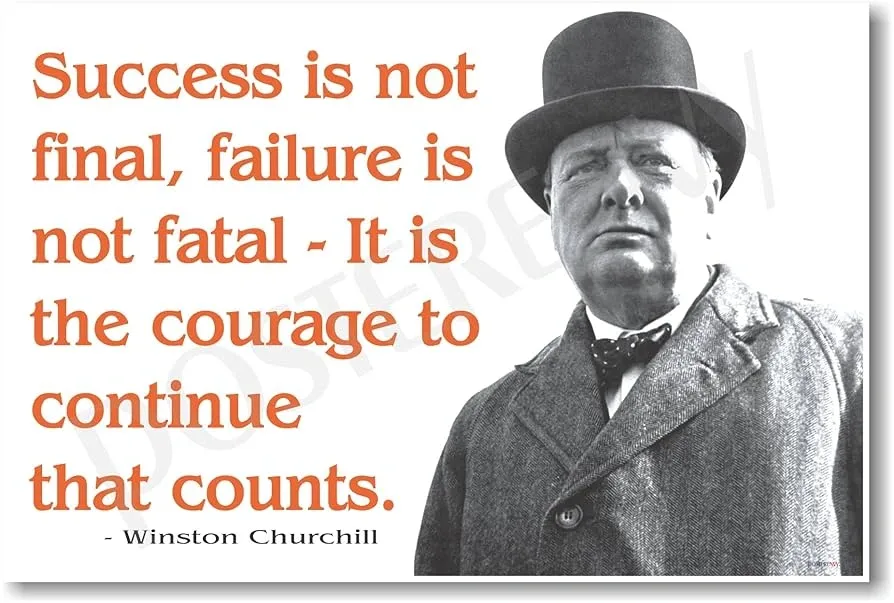
Image Source: Amazon.com
Sometimes we get so caught up in winning and losing that we forget life is bigger than any single moment.
“Success is not final, failure is not fatal: it is the courage to continue that counts,” a quote often attributed to Winston Churchill, cuts through the noise of perfectionism with a truth that can change everything.
Quote meaning
Here's what this quote gets right about life – neither your best days nor your worst days tell the whole story.
Success feels amazing, but it's not the finish line. Failure hurts like hell, but it's not the end of your world. The real magic happens in that space between – when you choose to keep going even when you don't know what's coming next.
That middle part, the “courage to continue” part? That's where your strength lives. Not in never failing, but in getting back up. Not in being perfect, but in being persistent.
Why this quote helps
This quote helps because it gives you permission to be human.
When you're dealing with depression or anxiety, every setback can feel like proof that you're broken. Every good day can feel like it needs to last forever or you've somehow failed again.
But this perspective reminds you that both success and failure are just stops along the way. Your worth isn't determined by how many times you fall or how many times you succeed. It's measured by your willingness to keep moving forward.
That takes the pressure off. You don't have to be perfect. You just have to keep trying.
Who said it
Here's something interesting – historians aren't actually sure Churchill said this. The quote gets attributed to him all the time, but there's no solid evidence he ever spoke or wrote these exact words.
But you know what? The message still rings true. Whether it came from Churchill or someone else entirely, the wisdom stands on its own. Sometimes the most powerful truths don't need a famous name attached to them.
Quick Reference Guide to These Mental Health Quotes
Sometimes you just need to find the right quote quickly. Maybe you're having a tough day and need something specific to help you through it. Here's a breakdown of what each quote offers and when it might help you most:
When you're doubting your strength:
- “You are stronger than you think” (Lori Gottlieb) – Reminds you of all the hard days you've already survived. This psychotherapist knows that recognizing your past resilience can shift you from feeling helpless to recognizing your capability.
When setbacks feel like failures:
- “Fall seven times, stand up eight” (Japanese Proverb) – This ancient wisdom makes setbacks normal instead of shameful. It's about persistence, not perfection.
When isolation feels overwhelming:
- “You are not alone” (Shonda Rhimes) – Cuts through lonely thoughts that convince you no one understands. Coming from someone who used writing to literally save her life.
When you're rushing your healing:
- “Healing takes time” (Mariska Hargitay) – Takes the pressure off immediate recovery. She learned this through her own trauma recovery journey.
When anxious thoughts won't stop:
- You don't have to control your thoughts (Dan Millman) – Relieves you from the exhausting job of policing every thought. You can observe without being controlled.
When depression tells you lies:
- “There is hope, even when your brain tells you there isn't” (John Green) – Helps separate your real self from what depression is telling you. Green openly shares his own battles with OCD and depression.
When you're frustrated with your progress:
- “Mental health is not a destination” (Noam Shpancer) – Removes the pressure to “arrive” at perfect mental health. This clinical psychologist reminds us it's about the journey.
When you feel defined by your struggles:
- “You are not the rain” (Matt Haig) – Creates crucial distance between who you are and what you're experiencing. From someone who rebuilt his life after contemplating suicide.
When you want to avoid difficult emotions:
- “The best way out is always through” (Robert Frost) – Encourages facing challenges head-on rather than avoiding them. Written by someone who knew personal hardship well.
When self-doubt feels overwhelming:
- “You are braver than you believe” (A.A. Milne) – Addresses that harsh inner critic we all carry. Even came from a children's story, proving simple truths are often the most powerful.
When hopelessness feels permanent:
- “Even the darkest night will end” (Victor Hugo) – Offers hope during your toughest moments. Hugo wrote this knowing both personal struggle and social upheaval.
When you feel pressure to be positive:
- “You don't have to be positive all the time” (Lori Deschene) – Gives you permission to feel the full range of human emotions without guilt. Founded Tiny Buddha after her own mental health struggles.
When shame keeps you from being authentic:
- “Being vulnerable is a strength” (Cara Delevingne) – Reframes vulnerability as courage rather than weakness. Based on her journey through anxiety, depression, and addiction.
When you don't feel worthy of love:
- “You are easy to love” (Sonalee Rashatwar) – Challenges the belief that love must be earned. Coming from a therapist who combines clinical work with advocacy.
When pain feels meaningless:
- “The wound is the place where the light enters you” (Rumi) – Transforms suffering into potential for growth. Wisdom from a 13th-century poet that still guides modern healing.
When you feel overwhelmed by life's challenges:
- “You can't stop the waves, but you can learn to surf” (Jon Kabat-Zinn) – Shifts focus from controlling everything to developing skills to navigate difficulties. From the creator of mindfulness-based stress reduction.
When confusion feels like failure:
- “Not until we are lost do we begin to understand ourselves” (Thoreau) – Reframes being lost as an opportunity for self-discovery. From his experiment in intentional living at Walden Pond.
When perfectionism paralyzes you:
- “Success is not final, failure is not fatal” (Often attributed to Churchill) – Frees you from the pressure that any single outcome defines you. It's about having the courage to continue.
Each of these quotes offers something different. The key is finding the ones that speak to you in your current situation and holding onto them when you need them most.
Conclusion
These quotes aren't going to magically fix everything – I wish they could. But what they can do is remind you that you're not broken, and you're definitely not alone.
I know how it feels when your mind convinces you that you're the only person struggling this much. When everyone else seems to have it figured out while you're barely getting through the day. The truth is, so many of us are fighting battles that others can't see.
These words come from people who've been in dark places too. They've felt hopeless. They've questioned their worth. They've wondered if things would ever get better. And somehow, they found ways through.
That doesn't mean your path will look exactly like theirs. Mental health isn't a one-size-fits-all journey. Some days will be harder than others. Some quotes will hit differently depending on where you are in your healing.
But here's what I want you to do: pick one quote that really speaks to you right now. Write it down somewhere you'll see it. Put it on your phone. Stick it on your bathroom mirror. Whatever works for you.
When those really tough moments hit – and they will – come back to those words. Let them remind you that other people have walked through similar darkness and made it to the other side.
Most importantly, please don't try to do this alone. Reaching out for help takes real courage. Whether that's talking to a friend, calling a therapist, or just acknowledging to yourself that you're struggling – that's strength, not weakness.
Your mental health matters. You matter. And even when your brain tries to convince you otherwise, there are people who care about your story and want to see you heal.
Key Takeaways
These 47 mental health quotes offer powerful reminders that you're not alone in your struggles and provide practical wisdom for navigating difficult times.
• Mental health is a journey, not a destination – Focus on developing coping skills rather than achieving perfect wellness
• Your thoughts don't define you – You can observe difficult emotions without being controlled by them
• Vulnerability is strength, not weakness – Seeking help and showing authentic emotions takes genuine courage
• Setbacks are normal and temporary – Both success and failure are part of the ongoing process of healing
• You possess more resilience than you realize – Your survival through past challenges proves your inner strength
Remember that these quotes work best when you choose one that resonates with your current situation and use it as a daily anchor during challenging moments. Professional support remains crucial—consider platforms like BetterHelp, Online-Therapy.com, or Talkspace when you need additional guidance on your mental health journey.
FAQs
Q1. What is a powerful quote to remember when struggling with mental health?
“You are stronger than you think. You have gotten through every bad day in your life, and you are undefeated.” This quote by Lori Gottlieb reminds us of our inherent resilience and ability to overcome challenges.
Q2. How can quotes help when battling mental health issues alone?
Quotes can provide comfort, perspective, and a sense of connection. They remind us that others have faced similar struggles and found ways through them. For example, John Green's quote “There is hope, even when your brain tells you there isn't” can be particularly reassuring during difficult times.
Q3. What quote can help combat feelings of loneliness?
Shonda Rhimes' quote “You are not alone. You are seen. I am with you. You are not alone” directly addresses feelings of isolation and reminds us of our inherent connection to others.
Q4. How does vulnerability relate to mental health?
Cara Delevingne's quote “Being vulnerable is actually a strength and not a weakness” challenges the common misconception that showing emotion is a sign of weakness. It encourages openness and honesty about our struggles as a path to healing.
Q5. What perspective can help when facing mental health setbacks?
The Japanese proverb “Fall seven times, stand up eight” offers a powerful reminder that setbacks are a normal part of any journey, including mental health recovery. It encourages persistence and resilience in the face of challenges.
References
[1] – https://www.goodhousekeeping.com/life/a39739060/mental-health-quotes/
[2] – https://blog.zencare.co/100-powerful-mental-health-quotes-to-uplift-you-in-2025/
[3] – https://warriormindcoach.com/mental-strength-quotes-to-build-resilience/
[4] – https://www.success.com/17-powerful-quotes-to-strengthen-your-mind/
[5] – https://www.goodreads.com/author/quotes/201386.Lori_Gottlieb
[6] – https://cheriishcounseling.com/2020/02/18/reflections-maybe-you-should-talk-to-someone-by-lori-gottlieb/
[7] – https://quotefancy.com/lori-gottlieb-quotes
[8] – https://www.mentaltoughness.partners/fall-down-seven-times-get-up-eight/
[9] – https://www.wagingpeace.org/fall-down-seven-times-stand-up-eight/
[10] – https://www.psychologytoday.com/us/blog/finding-meaning-in-lifes-struggles/201603/the-japanese-art-of-acceptance-shikata-ga-nai
[11] – https://www.fingertec.com/facebook/cubicleworld/article11/
[12] – https://medium.com/@shondarhimes/you-are-not-alone-69c1a10515ab
[13] – https://www.prevention.com/life/a38847116/loneliness-quotes/
[14] – https://www.vulture.com/2015/03/shonda-rhimes-writes-about-one-thing-loneliness.html
[15] – https://www.widow180.com/resources/loneliness-quotes-to-help-you-feel-less-alone
[16] – https://colorlines.com/article/shonda-rhimes-says-writing-saved-her-life/
[17] – https://tokimotivation.com/quote-meanings/robert-frost-quote-about-courage-the-best-way-out-is-always-through/
[18] – https://medium.com/personal-growth/robert-frost-on-human-suffering-the-only-way-is-through-b11a1dca4c4a
[19] – https://philosiblog.com/2012/01/18/promise-me-youll-always-remember-youre-braver-than-you-believe-and-stronger-than-you-seem-and-smarter-than-you-think/
[20] – https://elevatesociety.com/youre-braver-than-you-believe/
[21] – https://quotesexplained.com/always-remember-you-are-braver-than-you-believe/
[22] – https://eldonhenson.com/2016/01/29/you-are-braver-than-you-believe/
[23] – https://brainly.com/question/46550024
[24] – https://medium.com/@antvec14/victor-hugos-wisdom-even-the-darkest-night-will-end-and-the-sun-will-rise-87c6f75d74b5
[25] – https://www.mountainstherapy.com/blog/motivational-quotes-anxiety-depression-finding-hope-strength?srsltid=AfmBOoqxe5SS8YK8iG0oHdDxcFvzYhTvMYiGXS44WS9lu-Pfvi9LrDbT
[26] – https://californiaprimerecovery.com/inspirational-depression-quotes/
[27] – https://www.facebook.com/EnglishLiterature11/posts/even-the-darkest-night-will-end-and-the-sun-will-rise-victor-hugo-les-misérables/563185216275548/
[28] – https://www.buzzfeed.com/elliewoodward/cara-delevingne-just-opened-up-about-her-mental-health
[29] – https://people.com/cara-delevingne-talks-journey-finding-balance-in-mental-health-exclusive-8752194
[30] – https://www.harvestclinic.com.au/post/embracing-vulnerability-as-a-strength-in-mental-health
[31] – https://www.ourmental.health/stars-struggles/cara-delevingnes-mental-health-journey-triumphs-and-struggles-revealed
[32] – https://xenon.stanford.edu/~rfoon/files/quotes/files/thoreau.html
[33] – https://www.psychologytoday.com/us/blog/meditation-modern-life/202011/live-deliberately-thoreau-s-philosophy-remains-relevant


